
Protecting Your Home From Water Damage (Before It Gets Ugly)
October 24, 2026 · Southern Property Shop
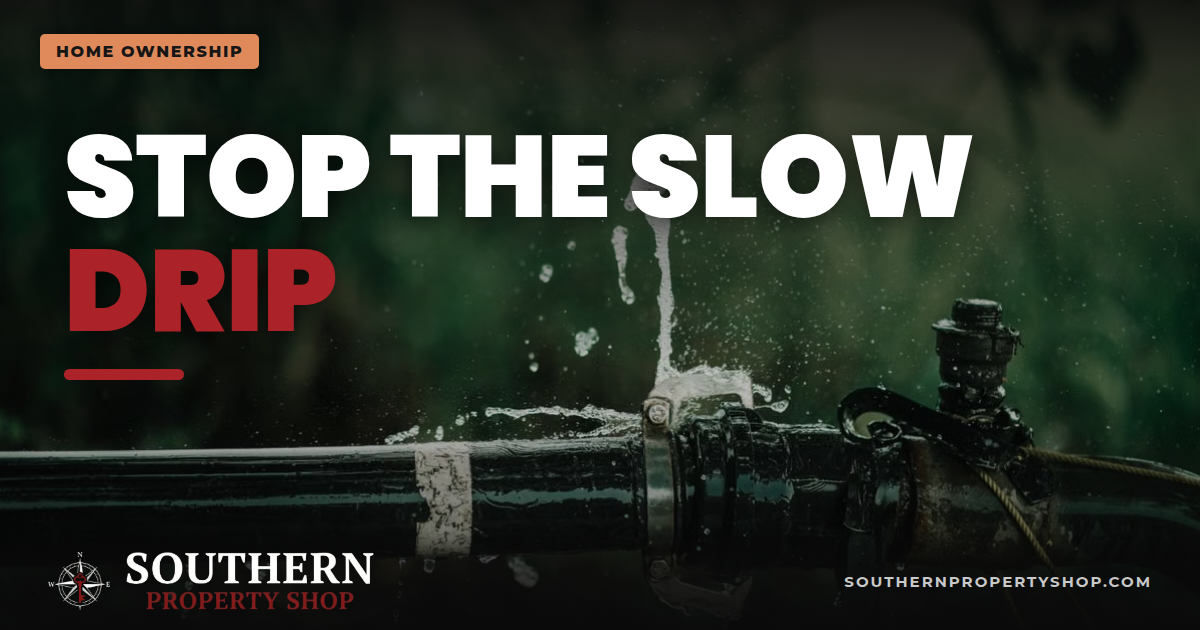
Quick answer: Protecting your home from water damage means keeping water out and catching leaks inside early. Keep your gutters clean and point the downspouts well away from the foundation. Make sure the soil slopes away from the house. Swap old rubber appliance hoses for braided ones, learn where your main shutoff is, and put inexpensive leak sensors near water heaters and sinks.
Here's a blunt truth: water is the most patient enemy your house will ever have. Fire is loud. Termites at least leave little piles behind. Water just hangs out behind the drywall, minding its own business, until one day your hallway floor feels like a trampoline.
I've walked a lot of houses, and the ones that make me wince usually aren't the ugly ones. They're the ones with a faint musty smell and a seller who says, "Oh, that's just the basement." Protecting your home from water damage isn't glamorous, but it's some of the cheapest peace of mind you can buy. Let's talk about how to do it without becoming a full-time plumber.
Why does water damage hit Chattanooga-area homes so hard?
We get real rain around here. Not polite drizzle. I mean the storms that roll over Lookout Mountain and dump a whole lot of water before you can find your umbrella. Add hilly lots, red clay that drains about as well as a coffee mug, and plenty of older homes with crawlspaces, and you've got a setup water loves.
If you live on a slope in North Chattanooga or up on Signal Mountain, gravity is sending runoff somewhere. In the flatter parts of Catoosa or Whitfield County, water may just sit there and soak in. Either way, your job is the same: give water a better place to go than your house.
Where does water actually get into a house?
Usually not where you'd guess. Big floods are rare. Slow drips are everywhere. Here are the usual suspects:
- Clogged gutters that overflow straight down the side of your foundation.
- Short downspouts that dump water a foot from the house. That's basically a watering can for your crawlspace.
- Bad grading, where the dirt slopes toward the house instead of away from it.
- Washing machine and fridge hoses that crack as they age.
- Old water heaters that rust out from the bottom.
- AC condensate lines that clog in summer and quietly overflow.
- Worn caulk around tubs, showers, and windows.
- Roof flashing around chimneys, vents, and skylights.
Notice how boring most of these are. That's the trick. Water damage is usually a disaster built out of tiny, boring problems nobody checked.
How do you start protecting your home from water damage outside?
Start outside, because the cheapest leak is the one that never gets in.
Gutters and downspouts
Clean your gutters, especially after the leaves come down in the fall. If you've got big oaks or poplars, you may need to do it more than once. Then check where your downspouts end. You want that water landing several feet from the foundation, not right up against it. Downspout extensions are cheap and about as hard to install as a garden hose.
Grading
Walk around your house during a good rain. (Yes, the neighbors will think you've lost it. Just wave.) Watch where the water goes. If it pools against the foundation, the soil needs to be built up so it slopes away. Sometimes that's a weekend with a shovel. Sometimes it's a French drain and a pro.
Crawlspaces and basements
A couple of times a year, grab a flashlight and stick your head into the crawlspace. Look for standing water, wet insulation, or a vapor barrier that's torn or missing. If you have a sump pump, pour a bucket of water into the pit and make sure it actually kicks on. A sump pump that doesn't work is just a very expensive hole.
Protecting your home from water damage inside: the small stuff that saves you
Inside the house, it's all about catching problems early and stopping them fast.
- Find your main water shutoff today. Not in the middle of an emergency. Today. Make sure it turns, and show everyone in the house where it is.
- Swap rubber hoses for braided steel on your washer. While you're at it, check the lines under the sinks and behind the toilet and fridge.
- Buy a few leak sensors. These little gadgets sit on the floor and squawk (or ping your phone) when they get wet. Put them by the water heater, washer, dishwasher, and under sinks.
- Keep an eye on your water heater. Rust on the bottom, water in the pan, or a rumbling sound all mean it's living on borrowed time.
- Re-caulk tubs and showers once the caulk starts cracking or peeling.
- Flush your AC condensate line so it doesn't back up into your ceiling during a hot spell.
One more sneaky one: your water bill. If it jumps for no reason, something's leaking. Turn off every faucet in the house and look at your water meter. If it's still moving, you've got a leak somewhere, and it's not going to fix itself out of politeness.
What should you do in the first hour after a leak?
Say you come home and there's water spreading across the kitchen floor faster than kudzu on a fence line. Here's the order:
- Shut off the water. Use the main valve if you can't find the source.
- Kill the power to wet areas if it's safe. If you'd have to stand in water to reach the breaker, don't. Call a pro.
- Take photos and video before you clean anything up.
- Start drying. Grab towels, fans, a wet vac, and a dehumidifier. Pull up wet rugs.
- Call your insurance company, and for anything big, a water mitigation company.
Speed matters more than anything here. Mold moves in fast, and it never pays rent. The faster things dry out, the smaller the bill.
Does homeowners insurance cover water damage?
Short version: sometimes. Most standard policies treat a sudden burst pipe very differently from a slow leak that's been dripping for months. The slow leak usually gets labeled "maintenance," which is insurance-speak for "that one's on you." Flooding from rising water, like a creek jumping its banks, usually isn't covered at all unless you have a separate flood policy.
You don't have to live on the Tennessee River for flooding to become your problem. Low spots, creeks, and overloaded storm drains catch people off guard all over the area. Read your policy and ask your insurance agent the dumb questions. Trust me, I'm a real estate agent. I ask dumb questions professionally.
If you want to dig deeper into the money side of owning a home, there's more on our Housing Explained blog.
The bottom line
Water damage almost never starts as a disaster. It starts as a drip, a clog, or a hose that's older than your car. Spend one Saturday afternoon checking your gutters, hoses, and crawlspace, and you've done more for your house than most people do all year.
You don't have to be handy to protect your home from water damage. You just have to be nosy. Look around, listen for drips, and trust your nose when something smells off.
Water has all the time in the world. You just have to get there first.
See what your home is worth today — free, and no obligation to sell → southernpropertyshop.com/free-home-valuation